How are Metal Braces Attached to Teeth?
Metal braces, the most recommended and effective orthodontic tool, are a conventional approach to straightening misaligned teeth or bites/malocclusion. These braces are fixed to the tooth surface, usually at the front but sometimes at the back of the teeth (lingual). By improving dental alignment, they can enhance the smile’s aesthetic appeal and considerably improve oral health. Here’s what else one needs to know about metal braces, including how exactly they are attached to teeth, how they work, their care, and their perks. The procedure of getting metal Braces treatment in Delhi may seem frightening at first, but don’t fear!

Metal Braces Components and Their Working
Metal braces are made of the following three parts:
Metal brackets- These are bonded to the front of each misaligned tooth with a dental adhesive. In case of lingual braces, these sit behind the teeth.
Metal archwire- This is a steel wire that passes through each bracket to connect them. It is tightened to create gentle, constant pressure on the teeth to push and pull them into the right position by reshaping the sockets that secure them in place. Periodically, it's changed.
A ligature or elastic band- This secures the archwire on the brackets. The band needs adjustments throughout the treatment. In case of self-ligating metal braces, the brackets can hold the archwire without a ligature or band.
All of the components are placed inside the mouth in an overall 1-2 hours. The patient has to get the braces system installed inside their mouth for anywhere between 6-12 months to align the teeth. When the teeth are aligned correctly, the tissue and bone structure grow around the teeth to support their new positions.
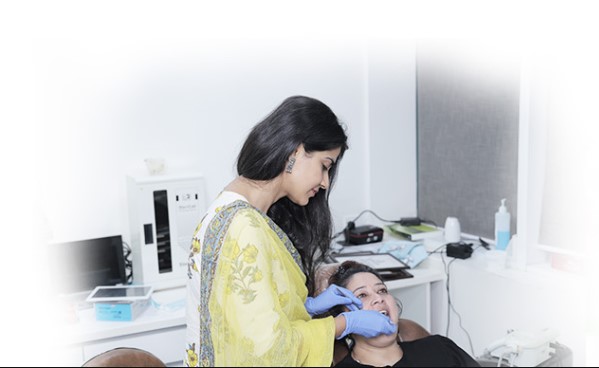
How are Metal Braces Put On?- The Stepwise Process
Consultation with a Right Orthodontist- An orthodontist will examine the dental arches, each tooth’s alignment, and discuss the treatment options. Next, an orthodontist will explain the braces process and the expected timeline and answer any questions. At this meeting, the patient can feel free to discuss concerns or preferences regarding their treatment.
Dental Evaluation- An orthodontist will perform dental X-rays to assess the teeth's position and any underlying issues like dental caries at the time of consultation.
Cleaning and Preparing of Teeth- During the appointment for installing the braces system, firstly, an orthodontist will thoroughly clean and dry the surface. It’s crucial to ensure there is no plaque or tartar, as it can interfere with the adhesive used to adhere brackets and lead to serious infections.
Bonding of Brackets to Teeth- On the clean, dry teeth surface, an orthodontist will apply the special bonding glue that can safely and securely attach the brackets to the teeth surface. After applying the glue, an orthodontist hardens the glue with a special blue light, which doesn’t harm the teeth and gums. Thereafter, an orthodontist places the brackets.
Securing the Archwire- An orthodontist will thread an archwire through all the bonded brackets.
Addition of Ligatures and Spacers- An orthodontist may apply ligatures or bands, if needed, to secure and support the archwires. In some cases, spacers are placed between the teeth to make space for the orthodontic bands to be placed in the future.
Post-Application Care and Follow-Ups- After getting braces installed, the patient can expect to experience slight discomfort and soreness, which are manageable with prescribed painkillers. For the first few days, the patient needs to stay on a liquid or very soft diet. The patient must use interdental brushes, floss threaders, and potentially a water flosser to clean between the braces and teeth.
Daily dental hygiene practice is necessary to avoid damage to braces and teeth. Also, in every 4-6 weeks, the patient has to attend follow-up appointments. These appointments are crucial to monitor the treatment progress, make necessary changes/adjustments, prevent potential issues, and ensure the treatment plan is going as planned.
What Can Metal Braces Do?
Metal braces can:
Straighten teeth and address issues like crowded, crooked, or gapped teeth
Fix bite problems like overbite, underbite, open bite, and crossbite
Improve your smile and boost your confidence
Improve oral health and general well-being.
What is the cost of braces?
Braces treatment cost in Delhi can range from Rs. 20,000 to Rs. 1,40,000. This can vary from patient to patient and greatly depending on the type of dental expert chosen and the severity of the case.
Reap the Benefits of Metal Braces.
Now, as you are aware of how braces help, work, and are installed, you are ready to take the next step. Schedule a consultation with Dr. Ravneet Kaur, the best orthodontist for getting metal braces treatment in Delhi.


Comments
Post a Comment